
Your child can solve one problem on Monday and seem completely lost on Tuesday. It's tempting to say they aren't a math person, or to push through a stack of the same worksheet. Try a different question: what is the smallest step that stopped making sense? A tough lesson can hide a very specific missing idea.
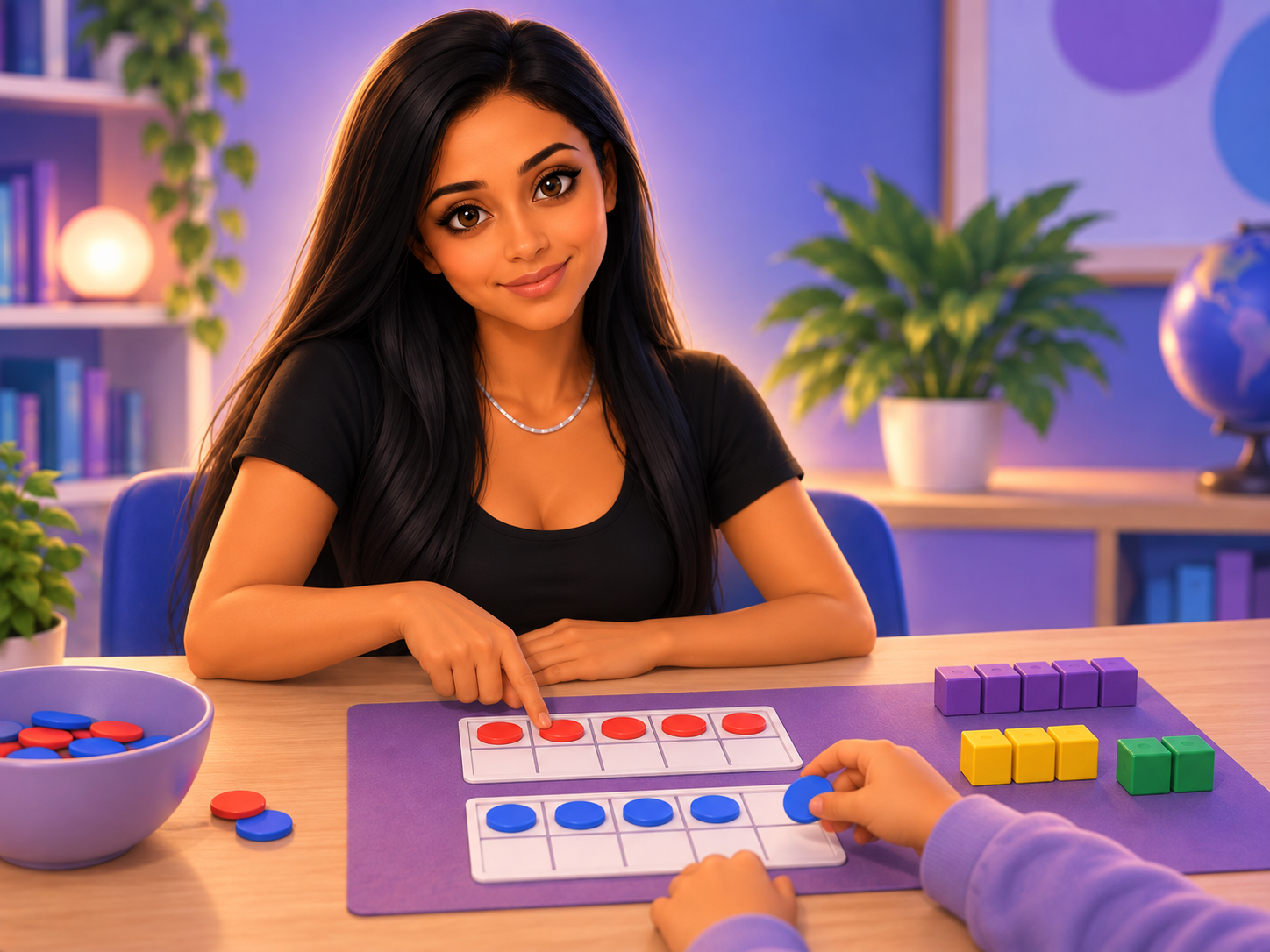
Say the problem is 23 + 9. Before walking through a rule, ask your child what they know about 23. Can they make two groups of ten and three loose ones with coins, blocks or a quick sketch? What happens to the loose ones when nine more arrive? If the grouping is clear but the calculation is not, you have a different starting point than if the grouping itself feels unfamiliar. Neither observation is a verdict about your child.
Try a three-step reset tonight:
- Ask for one explanation: 'Show me what you tried.' Give them time to draw or move objects instead of demanding a fast answer.
- Move one step back. Pick a related, easier example, then reconnect it to the original question.
- End with one question they can now explain. Write down what still feels confusing so you can ask their teacher about it.
This isn't a home diagnosis or a replacement for a teacher. It is a gentler way to find a starting point. The Education Endowment Foundation's guidance for older primary and middle-school learners emphasizes using what children already know, noticing misconceptions, and giving clear, specific feedback. That idea works at the kitchen table too: respond to the thinking you actually saw, not to a broad label.
In LIRANTIS, we're working toward a game-first way for kids in grades 1-7 to keep trying, with Liran there to explain when a player gets stuck. Until then, one patient question can make tonight's math feel possible again. Join the early-access list if you'd like to follow along.
Further reading: EEF guidance on mathematics in Key Stages 2 and 3.